
Metabolic Research
Reconstitution and Storage Best Practices for Lyophilised Peptides
·Educational reference
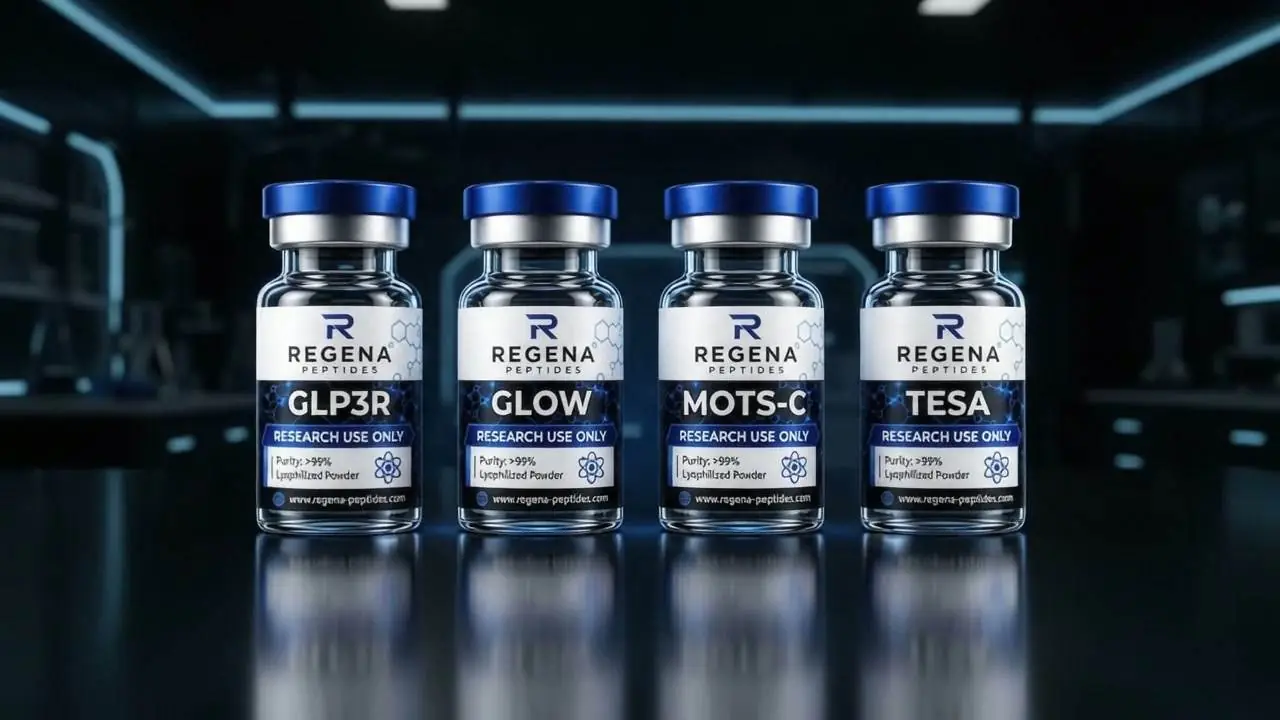
Lyophilised peptides, often supplied as a white, fluffy powder, are a common format in research laboratories due to their enhanced stability compared to peptides in solution. However, their long-term integrity and activity are highly dependent on correct reconstitution and subsequent storage practices. Deviation from optimal protocols can lead to degradation, reduced efficacy, and compromised experimental data. This article reviews essential guidelines for handling lyophilised peptides.
## Understanding Lyophilisation
Lyophilisation, or freeze-drying, is a dehydration process used to preserve biological materials. Water is removed by sublimation after freezing, resulting in a porous, solid matrix. This process significantly reduces degradation pathways that rely on water, such as hydrolysis and oxidation. Peptides in this state are generally more stable, making them suitable for shipment and extended storage at refrigerated or frozen temperatures. However, the lyophilised cake itself remains hygroscopic and can absorb moisture from the atmosphere, initiating degradation if exposed.
## Reconstitution Solvent Selection
The choice of solvent for reconstitution is paramount and depends on the peptide's physicochemical properties, specifically its hydrophobicity and amino acid sequence, as well as the intended downstream application.
### Aqueous Solvents
For most hydrophilic or moderately hydrophobic peptides, sterile, deionized water or phosphate-buffered saline (PBS) is suitable. It is crucial to use high-purity water (e.g., Milli-Q grade) to avoid introducing contaminants that could react with the peptide or interfere with experimental assays. If peptides contain cysteine residues, ensure the water has been degassed to minimize oxidation.
### Organic Solvents
Highly hydrophobic peptides often require a small amount of an organic co-solvent to achieve initial dissolution. Common choices include dimethyl sulfoxide (DMSO), acetonitrile (ACN), or dimethylformamide (DMF). It is advisable to dissolve the peptide in a minimal volume of the organic solvent first, then dilute to the desired concentration with an aqueous buffer. When using organic solvents, consider potential cellular toxicity or assay compatibility if the peptide is to be used in *in vitro* cell culture models.
### Acidic or Basic Conditions
Peptides with extremely basic or acidic amino acid side chains might require slight pH adjustments for optimal solubility. Acetic acid (0.1–1.0%) or ammonium hydroxide (0.1–1.0%) can be used judiciously, but researchers must be mindful of potential peptide degradation at extreme pH values over time. Always start with neutral solvents and only resort to pH modification if necessary.
## Reconstitution Procedure
Accuracy and aseptic technique are critical during reconstitution.
1. **Warm-up (Optional):** Allow the lyophilised peptide vial to equilibrate to room temperature for at least 15-30 minutes before opening to prevent condensation, which can introduce moisture. 2. **Add Solvent:** Carefully add the chosen solvent to the vial. It is often recommended to add the solvent slowly to the walls of the vial rather than directly onto the powder to facilitate complete wetting. 3. **Gentle Mixing:** Do not vortex vigorously, as this can lead to peptide degradation or aggregation, particularly for larger peptides. Instead, gently swirl or pipette up and down to mix. If dissolution is slow, ultrasonication in a water bath can be employed for short durations (<5 minutes) to aid solubility. 4. **Complete Dissolution:** Ensure the peptide is completely dissolved before proceeding. Undissolved particles can lead to inaccurate concentration measurements and inconsistent experimental results.
## Storage of Reconstituted Peptides
The stability of a peptide in solution is significantly lower than in its lyophilised form due to increased molecular mobility and access to reactive species.
### Temperature
For short-term storage (hours to a few days), reconstituted peptides can often be kept at 4°C. For longer-term storage (weeks to months), freezing at -20°C or -80°C is generally recommended. However, repeated freeze-thaw cycles should be avoided as they can induce degradation due to ice crystal formation and pH shifts.
### Aliquoting
To mitigate the effects of freeze-thaw cycles, reconstitute peptides to a stock concentration and then aliquot into smaller, single-use volumes. This allows researchers to thaw only the amount needed for an experiment, preserving the integrity of the remaining stock.
### Container Material
Store reconstituted peptides in low-protein binding polypropylene or glass vials to minimize adsorption to the container walls, especially at low peptide concentrations.
### Light Protection
Some peptides, particularly those containing amino acids like tryptophan, tyrosine, or methionine, are photosensitive. Always store such peptides in amber vials or wrap clear vials in aluminum foil to protect them from light exposure.
### pH and Buffers
Maintain the pH of the peptide solution within a stable range, typically 6.0-8.0, unless specific experimental conditions dictate otherwise. The presence of protease inhibitors can also be considered if proteolytic degradation is a concern within a specific experimental model.
## Indicators of Degradation
Observable signs of peptide degradation can include changes in solubility (e.g., precipitation after initial dissolution), discoloration, or a significant decrease in biological activity. Researchers should implement quality control checks, such as analytical HPLC or mass spectrometry, to monitor peptide integrity over time, particularly for long-term studies.
## Conclusion
Diligent adherence to best practices for reconstitution and storage of lyophilised peptides is fundamental to the reliability and reproducibility of experimental research. By carefully selecting solvents, following precise reconstitution procedures, and implementing appropriate storage conditions, researchers can maximize peptide stability and ensure the integrity of their scientific findings.
*Educational reference only. Compounds are for in-vitro research use only.*
Share Regena with a research colleague. They get trusted peptides; you earn 3–30% affiliate commission based on your monthly referred sales.
Not sure which peptide fits your research question?
Take the 60-second Find Your Peptides quiz — it points you to the most relevant reference compounds for your area of investigation.
Start the quizMore in Metabolic Research
2026-05–18
Peptide Reconstitution and Storage: A Laboratory Reference
2026-05-23
GLP-1 Receptor Agonists: A Mechanistic Overview for Researchers
2026-05-20
Retatrutide: Triple-Agonist Peptide in Metabolic Research
2026-05-22
BPC-157 in Tissue-Repair Research: What the Literature Shows
2026-07-18
BPC-157 vs TB-500: A Comparative Research Guide
2026-05-06