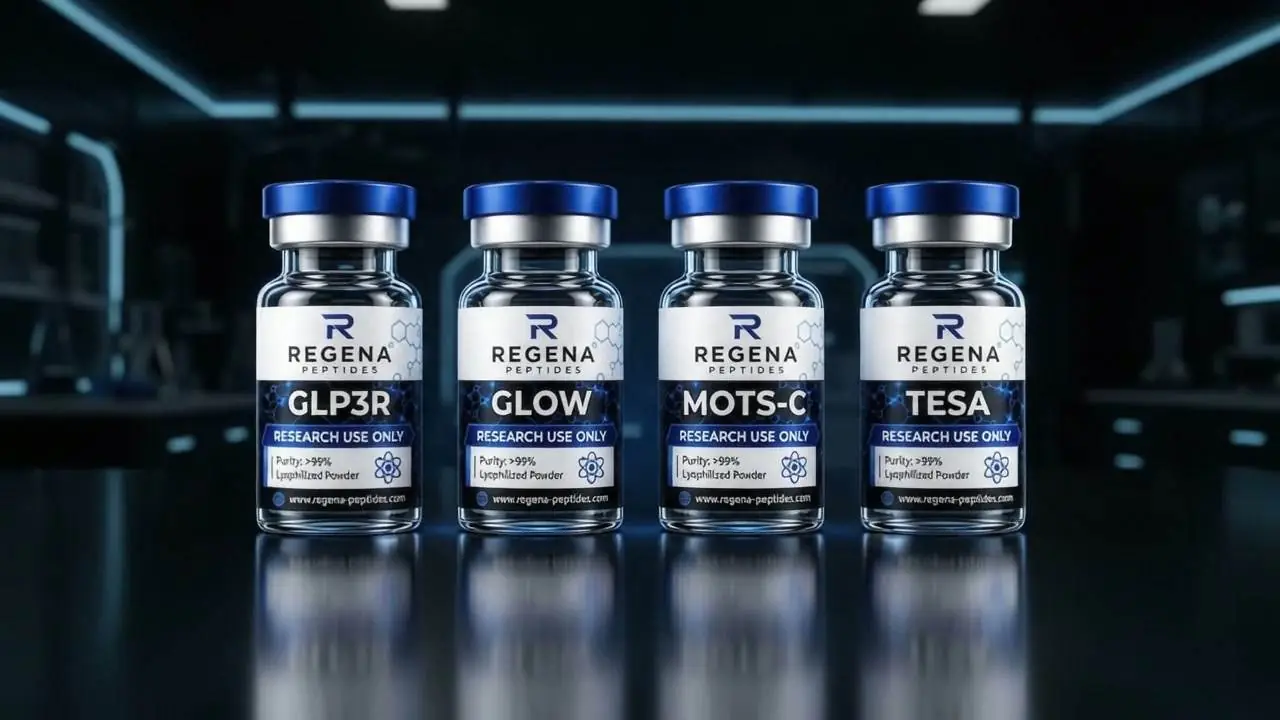

Metabolic Research
Growth Hormone Axis Research: Ipamorelin, CJC-1295, & Literature
·Educational reference
The somatotropic axis, also known as the growth hormone (GH) axis, is a complex endocrine system pivotal for regulating growth, metabolism, and body composition. Two synthetic peptides, Ipamorelin and CJC-1295, have garnered significant attention in research for their distinct yet complementary roles in modulating this axis. This article delves into the mechanisms of action for both compounds and reviews relevant findings from scientific literature.
## Understanding the Growth Hormone Axis
The growth hormone axis is primarily controlled by the hypothalamus, pituitary gland, and liver. The hypothalamus secretes Growth Hormone-Releasing Hormone (GHRH) and somatostatin, a GH-inhibiting hormone. GHRH stimulates the anterior pituitary to secrete GH, which then acts on target tissues, notably the liver, to produce insulin-like growth factor-1 (IGF-1). IGF-1 mediates many of GH's anabolic effects. Disruptions in this intricate balance can lead to various physiological impairments, making its modulation a key area of research.
## Ipamorelin: A Selective Growth Hormone Secretagogue
Ipamorelin is a synthetic pentapeptide that acts as a ghrelin mimetic. Ghrelin is an endogenous peptide that binds to the growth hormone secretagogue receptor (GHSR-1a), stimulating GH release from the pituitary. Unlike earlier ghrelin mimetics, Ipamorelin is notable for its high selectivity for GH release without significantly affecting the secretion of other pituitary hormones such as adrenocorticotropic hormone (ACTH), prolactin, or cortisol. This selectivity is a key characteristic that distinguishes it in research models.
Studies in various research models have indicated that Ipamorelin can induce a pulsatile release of GH, mimicking the natural physiological pattern. This pulsatility is crucial as it avoids the desensitization of GH receptors that can occur with continuous GH stimulation. Research has explored Ipamorelin's potential in scenarios requiring enhanced GH secretion, such as in models of sarcopenia or conditions involving GH deficiency. For instance, literature suggests that Ipamorelin, by selectively increasing GH levels, contributes to an anabolic environment without the undesirable side effects associated with broader endocrine system activation.
## CJC-1295: A GHRH-Analog with DAC
CJC-1295 is an analog of GHRH, the primary hypothalamic peptide responsible for stimulating GH release. What makes CJC-1295 particularly interesting in research is its modification with a Drug Affinity Complex (DAC®). This DAC significantly extends the half-life of CJC-1295, allowing for a sustained release of GH. The conventional GHRH has a very short half-life, necessitating frequent administration to achieve persistent effects. The presence of DAC in CJC-1295 allows it to bind reversibly to endogenous albumin, protecting it from enzymatic degradation and prolonging its action.
Similar to Ipamorelin, CJC-1295 stimulates the pituitary to release GH. However, its mechanism is directly via the GHRH receptor. Research models have shown that CJC-1295 can induce a prolonged and physiological increase in GH and subsequent IGF-1 levels. This sustained elevation is distinct from the pulsatile release induced by some GH secretagogues and explores a different approach to GH modulation. The extended half-life of CJC-1295 is particularly relevant for research requiring prolonged elevation of GH. When combined with a GHRP (Growth Hormone Releasing Peptide) like Ipamorelin, CJC-1295 can elicit an even greater synergistic release of GH, as they act via different receptor pathways to stimulate somatotropes.
## Synergy in GH Axis Modulation: Ipamorelin and CJC-1295 in Research
The combined administration of Ipamorelin and CJC-1295 has been a subject of interest in research paradigms. Literature suggests that these two peptides can exhibit a synergistic effect on GH release. CJC-1295, as a GHRH analog, primes the pituitary by stimulating GHRH receptors, while Ipamorelin, as a ghrelin mimetic, acts on GHSR-1a receptors. By activating two distinct pathways that converge on GH secretion, their combined use has been shown in research models to result in a significantly greater GH pulse amplitude and overall GH secretion compared to either peptide alone. This synergistic action allows for a more robust and sustained elevation of GH, which has implications for studying various physiological processes influenced by the somatotropic axis.
### Practical Considerations for Peptide Reconstitution in Research
For researchers working with peptides like Ipamorelin and CJC-1295, proper reconstitution is critical for ensuring experimental integrity and peptide stability. Peptides are typically supplied as lyophilized powders and require reconstitution with a suitable solvent, often bacteriostatic water or sterile saline. The process generally involves gentle swirling, not shaking, to avoid damaging the peptide structure. Storage conditions post-reconstitution are also paramount; refrigeration (2-8°C) is standard to maintain activity. It is imperative to follow manufacturer guidelines precisely to ensure peptide stability and accurate experimental outcomes. Researchers should also be aware of the peptide concentration, often expressed as milligrams per milliliter (mg/mL), and calculate the appropriate volume for their specific research protocols.
## Conclusion
Ipamorelin and CJC-1295 represent two distinct yet complementary avenues for modulating the growth hormone axis in research. Ipamorelin offers a selective, pulsatile GH release through ghrelin receptor agonism, while CJC-1295 provides a sustained GH elevation via GHRH receptor stimulation, thanks to its extended half-life. Their synergistic potential when used in combination offers researchers powerful tools for investigating the multifaceted roles of GH in various biological systems. Continued research elucidates their precise mechanisms and broadens our understanding of GH physiology and its potential modulators.
Educational reference only. Research chemicals are for in-vitro use only.
Share Regena with a research colleague. They get trusted peptides; you earn 3–30% affiliate commission based on your monthly referred sales.
Not sure which peptide fits your research question?
Take the 60-second Find Your Peptides quiz — it points you to the most relevant reference compounds for your area of investigation.
Start the quizMore in Metabolic Research
2026-05–18
Peptide Reconstitution and Storage: A Laboratory Reference
2026-05-23
GLP-1 Receptor Agonists: A Mechanistic Overview for Researchers
2026-05-20
Retatrutide: Triple-Agonist Peptide in Metabolic Research
2026-05-22
BPC-157 in Tissue-Repair Research: What the Literature Shows
2026-07-18
BPC-157 vs TB-500: A Comparative Research Guide
2026-05-06