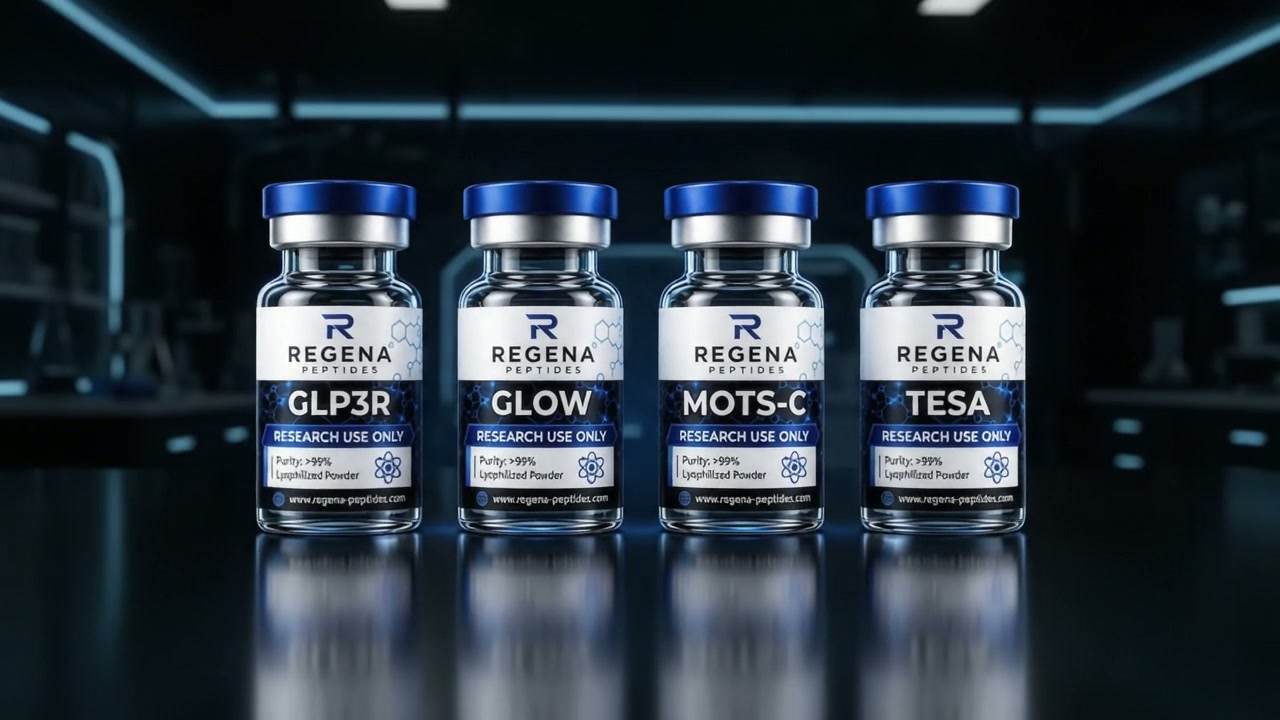

Daily keyword research · tesamorelin research peptide
Tesamorelin Research Peptide: GHRH Analog & Mitochondrial Peptides
Explore tesamorelin research peptide, a GHRH analog, and its properties. Also, delve into mitochondrial peptides like SS-31 and MOTS-c for laboratory reference.
Tesamorelin: A Growth Hormone-Releasing Hormone (GHRH) Analog
Tesamorelin is a synthetic peptide analog of growth hormone-releasing hormone (GHRH). It consists of the first 44 amino acids of human GHRH, with the addition of a *trans*-3-hexenoyl group to the N-terminus. This structural modification enhances its stability and duration of action within *in vitro* and *in vivo* research settings. As a GHRH analog, tesamorelin binds to and activates the GHRH receptor, a G protein-coupled receptor primarily located in the anterior pituitary gland.
Activation of the GHRH receptor stimulates the synthesis and pulsatile release of endogenous growth hormone (GH) from somatotroph cells. This mechanism distinguishes tesamorelin from direct GH administration, as it promotes a more physiological pattern of GH secretion. The subsequent elevation in circulating GH levels leads to an increase in insulin-like growth factor 1 (IGF-1) production, primarily in the liver. Research involving tesamorelin often centers on its effects on metabolic pathways, body composition alterations, and its potential roles in various physiological processes, particularly those involving GH/IGF-1 axis modulation.
Mechanisms of Action and Signal Transduction
The binding of tesamorelin to the GHRH receptor initiates a signaling cascade predominantly through the adenylyl cyclase/cyclic AMP (cAMP)/protein kinase A (PKA) pathway. Receptor activation leads to an increase in intracellular cAMP levels, which in turn activates PKA. PKA then phosphorylates various downstream targets, including transcription factors, ultimately promoting the gene expression and synthesis of GH. This intricate signaling mechanism highlights tesamorelin's utility as a tool for studying the regulation of the GH/IGF-1 axis.
Further investigation also explores potential alternative signaling pathways or interactions with other regulatory systems that might be modulated by tesamorelin. Understanding these molecular mechanisms is critical for researchers aiming to delineate the full scope of tesamorelin's biological activities and its precise influence on cellular function and systemic regulation in laboratory models.
Research Applications of Tesamorelin
Research studies employing tesamorelin often investigate its effects on adipose tissue distribution, particularly visceral adipose tissue (VAT). Findings from *in vitro* and *in vivo* studies consistently suggest that tesamorelin may selectively reduce VAT without significantly impacting subcutaneous fat. This specificity makes it a valuable research compound for exploring the pathophysiology of lipodystrophy conditions and metabolic dysregulation, where excessive VAT accumulation is a contributing factor.
Beyond its effects on adipose tissue, tesamorelin is also explored for its potential influence on lipid profiles, glucose homeostasis, and inflammatory markers in experimental models. Investigators examine how sustained elevation of GH and IGF-1, induced by tesamorelin, might impact insulin sensitivity, cholesterol metabolism, and the inflammatory cascade. Such research contributes to a broader understanding of metabolic health and disease progression.
Related Research Areas: Mitochondrial Peptides
The broader landscape of peptide research extends to compounds that influence cellular energy metabolism, such as mitochondrial-derived peptides. These endogenous peptides are encoded by mitochondrial DNA and play crucial roles in maintaining mitochondrial function, cellular resilience, and metabolic regulation. Two prominent examples are SS-31 (elamipretide) and MOTS-c.
SS-31 (Elamipretide)
SS-31, also known as elamipretide, is a synthetic tetrapeptide (D-Arg-Dmt-Lys-Phe-NH2) that localizes to the inner mitochondrial membrane. Its primary mechanism of action involves interacting with cardiolipin, a phospholipid essential for the structural integrity and function of the electron transport chain (ETC). By binding to cardiolipin, SS-31 is believed to stabilize the inner mitochondrial membrane, reduce reactive oxygen species (ROS) production, and improve ATP synthesis efficiency. Research studies on SS-31 investigate its effects on mitochondrial bioenergetics, oxidative stress, and cell viability in models of ischemia-reperfusion injury, neurodegeneration, and metabolic disorders. For a more comprehensive review of SS-31 and other mitochondrial peptides, researchers may refer to dedicated literature reviews (e.g., visit our companion blog on [Mitochondrial Peptides: SS-31, MOTS-c and the Research Literature](/mitochondrial-peptides-ss-31-mots-c-research-review-2026-07-16)).
MOTS-c
MOTS-c (Mitochondrial Open Reading Frame of the 12S rRNA Type-c) is a 16-amino acid peptide encoded in the mitochondrial genome. It is unique among mitochondrial peptides for its extracellular effects, acting as a mitokine. Research suggests MOTS-c plays a significant role in regulating metabolic homeostasis, influencing insulin sensitivity, glucose utilization, and energy expenditure. Studies have demonstrated its ability to modulate the cellular response to metabolic stress and to protect against diet-induced obesity and insulin resistance in various animal models. The mechanisms of MOTS-c action are multifaceted, involving pathways such as AMPK activation and regulation of folate metabolism. Its systemic and localized effects provide a rich area for further exploration into metabolic syndrome and age-related metabolic dysfunctions.
Conclusion
Tesamorelin, as a GHRH analog, provides a valuable tool for researchers investigating the GH/IGF-1 axis and its downstream metabolic effects, particularly concerning adipose tissue distribution. Concurrently, the exploration of mitochondrial peptides like SS-31 and MOTS-c offers insights into fundamental aspects of cellular energy regulation and metabolic health. These peptides represent distinct yet complementary avenues of research within the broader field of endocrinology and cellular biology, contributing to a deeper understanding of complex physiological processes.
Compliance Note
All peptides discussed, including tesamorelin, SS-31, and MOTS-c, are strictly for *in vitro* research and laboratory reference use only. They are not intended for human consumption or therapeutic applications. Research should be conducted in accordance with established laboratory protocols and ethical guidelines, adhering to all applicable regulations for research materials.
Frequently asked questions
What is tesamorelin?+
Tesamorelin is a synthetic peptide analog of growth hormone-releasing hormone (GHRH), modified for enhanced stability and duration of action in research settings.
How does tesamorelin work?+
Tesamorelin binds to GHRH receptors in the pituitary, stimulating the natural synthesis and release of endogenous growth hormone (GH), which subsequently increases IGF-1 production.
What are common research applications for tesamorelin?+
Research on tesamorelin often investigates its effects on adipose tissue distribution (particularly visceral fat), lipid profiles, glucose homeostasis, and inflammatory markers in experimental models.
What are mitochondrial peptides?+
Mitochondrial peptides are endogenous peptides encoded by mitochondrial DNA that play roles in mitochondrial function, cellular resilience, and metabolic regulation. Examples include SS-31 and MOTS-c.
What is SS-31?+
SS-31 (elamipretide) is a synthetic tetrapeptide that targets the inner mitochondrial membrane, interacting with cardiolipin to stabilize mitochondrial function and reduce oxidative stress.
What is MOTS-c?+
MOTS-c is a 16-amino acid mitochondrial-derived peptide that acts as a mitokine, influencing metabolic homeostasis, insulin sensitivity, and energy expenditure in research models.
Continue your research
Trusted reference supplier · Verified across review platforms
Trustpilot
4.8 / 5 · verified buyers
Google Reviews
Rated by Marbella clients
Scamadviser
Trust score verified
Verified Supplier
Peptides Lookup verified
SSL Secured
256-bit encrypted checkout
HPLC Verified
Batch COA on every vial
EU Sourced
Tested & shipped from EU
Discreet Delivery
Temperature-controlled
We accept · Multiple secure payment methods
- Bank Transfer
- Card via Revolut