
Daily keyword research · peptide storage guide
Peptide Storage Guide: Optimizing Research Compound Integrity
Comprehensive guide for researchers on optimal peptide storage conditions to maintain integrity and activity for laboratory reference and in-vitro studies.
Introduction to Peptide Storage
Peptides are critical biomolecules in numerous research applications, ranging from biochemical assays to advanced in-vitro studies. Their efficacy and structural integrity are highly dependent on appropriate storage conditions. Improper storage can lead to degradation, aggregation, and loss of biological activity, thereby compromising experimental results. This guide outlines best practices for the storage of research-grade peptides, ensuring their stability for diverse laboratory reference purposes.
Factors Affecting Peptide Stability
Several factors can influence the stability of a peptide over time. Understanding these factors is crucial for implementing effective storage strategies:
- **Temperature:** Elevated temperatures are a primary driver of peptide degradation. Both chemical and enzymatic degradation pathways are accelerated at higher temperatures.
- **Moisture:** Water can facilitate hydrolysis, particularly in lyophilized peptides. The presence of moisture can also lead to aggregation.
- **pH:** Extreme pH values (both acidic and basic) can induce peptide backbone hydrolysis, deamidation, and side-chain modifications.
- **Light Exposure:** Ultraviolet (UV) light can cause photo-oxidation and degradation of certain amino acid residues, such as tryptophan, tyrosine, and histidine.
- **Oxygen:** Oxidation, particularly of methionine, cysteine, and tryptophan residues, can occur in the presence of oxygen.
- **Contamination:** Microbial growth can lead to peptide degradation.
- **Repeated Freeze-Thaw Cycles:** These cycles can induce denaturation, aggregation, and physical degradation due to ice crystal formation and freeze concentration.
Storage Conditions for Lyophilized Peptides
Lyophilized (freeze-dried) peptides are generally more stable than peptides in solution. For long-term storage of lyophilized peptides:
- **Temperature:** Store at -20°C or, preferably, -80°C. Lower temperatures significantly reduce the rate of chemical degradation.
- **Desiccation:** Store peptides in a desiccated environment, ideally with a desiccant, to prevent moisture absorption. This is particularly important if the storage container is opened frequently.
- **Container:** Use airtight, amber-colored vials if possible, to minimize light exposure and atmospheric moisture ingress. Nitrogen or argon gas can be flushed into vials before sealing to displace oxygen.
Storage Conditions for Peptides in Solution
Peptides in solution are inherently less stable than their lyophilized counterparts and require more stringent storage protocols:
- **Solvent Selection:** The choice of solvent can significantly impact stability. Ultra-pure, sterile water or buffer systems compatible with the peptide's pI are recommended. Avoid solvents containing residual metals or contaminants.
- **Concentration:** Peptides may exhibit different stabilities at varying concentrations. Aggregation can be more pronounced at higher concentrations.
- **pH Optimization:** Where feasible, store peptides in solutions buffered to their optimal stability pH. This often falls between pH 5 and 7, but can vary widely depending on the amino acid sequence.
- **Temperature:** Peptides in solution should be stored at -20°C. For short-term use (days to weeks), storage at 4°C may be acceptable for some stable peptides, but should be avoided for sensitive compounds.
- **Aliquoting:** To prevent degradation from repeated freeze-thaw cycles, aliquot peptide solutions into smaller volumes. This allows researchers to thaw only the amount needed for immediate experiments.
- **Freeze-Thaw Cycles:** Minimize freeze-thaw cycles. Each cycle can damage the peptide structure. If aliquoting is not feasible for very short-term use, keeping the stock solution at 4°C might be preferable to frequent freezing and thawing, if the peptide is known to be stable at this temperature for the intended duration.
- **Protection from Light and Oxygen:** Store solutions in amber vials and, if applicable, degas buffers or flush with inert gas to reduce oxygen exposure.
Specific Considerations for Peptides like Thymosin Alpha-1
Some peptides, such as Thymosin Alpha-1, play crucial roles in immune signaling pathways, making their structural integrity paramount for accurate research outcomes. As a critical [peptide for immune system research](https://regena.peptides/blog/thymosin-alpha-1-immune-signalling-primer-2026-07-18), maintaining its stability through rigorous storage protocols is essential for studies investigating its effects on various cellular functions and immune responses. Researchers should refer to specific product data sheets for compound-specific recommendations, which may include unique solvent preferences or stability profiles.
Reconstitution and Handling
- **Preparation:** Always allow lyophilized peptides to reach room temperature before opening the vial to prevent condensation, which can introduce moisture.
- **Solvent Addition:** Add the reconstituting solvent slowly to avoid vigorous agitation that could induce aggregation.
- **Dissolution:** Gently swirl or pipette the solution to dissolve the peptide. Avoid vigorous vortexing unless specified, as it can shear or denature delicate peptides.
- **Sterility:** Maintain aseptic technique during reconstitution to prevent microbial contamination, especially if the peptide is to be used in cell culture or sterile assays.
Compliance and Safety Note
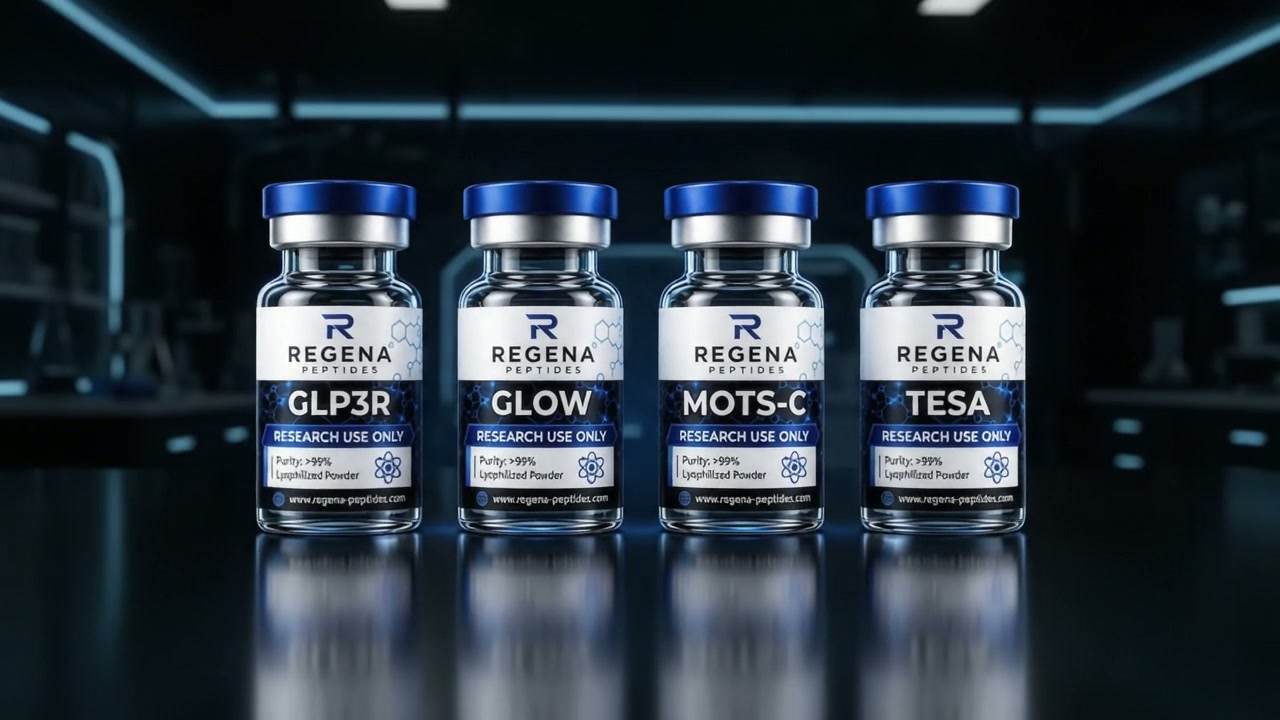
Regena Peptides' compounds, including all referenced peptides, are strictly for *in-vitro* research and laboratory reference material use only. These products are not intended for human consumption or therapeutic purposes. Researchers must adhere to institutional safety guidelines and ethical regulations when handling and storing these materials.
Continue your research
Trusted reference supplier · Verified across review platforms
Trustpilot
4.8 / 5 · verified buyers
Google Reviews
Rated by Marbella clients
Scamadviser
Trust score verified
Verified Supplier
Peptides Lookup verified
SSL Secured
256-bit encrypted checkout
HPLC Verified
Batch COA on every vial
EU Sourced
Tested & shipped from EU
Discreet Delivery
Temperature-controlled
We accept · Multiple secure payment methods
- Bank Transfer
- Card via Revolut