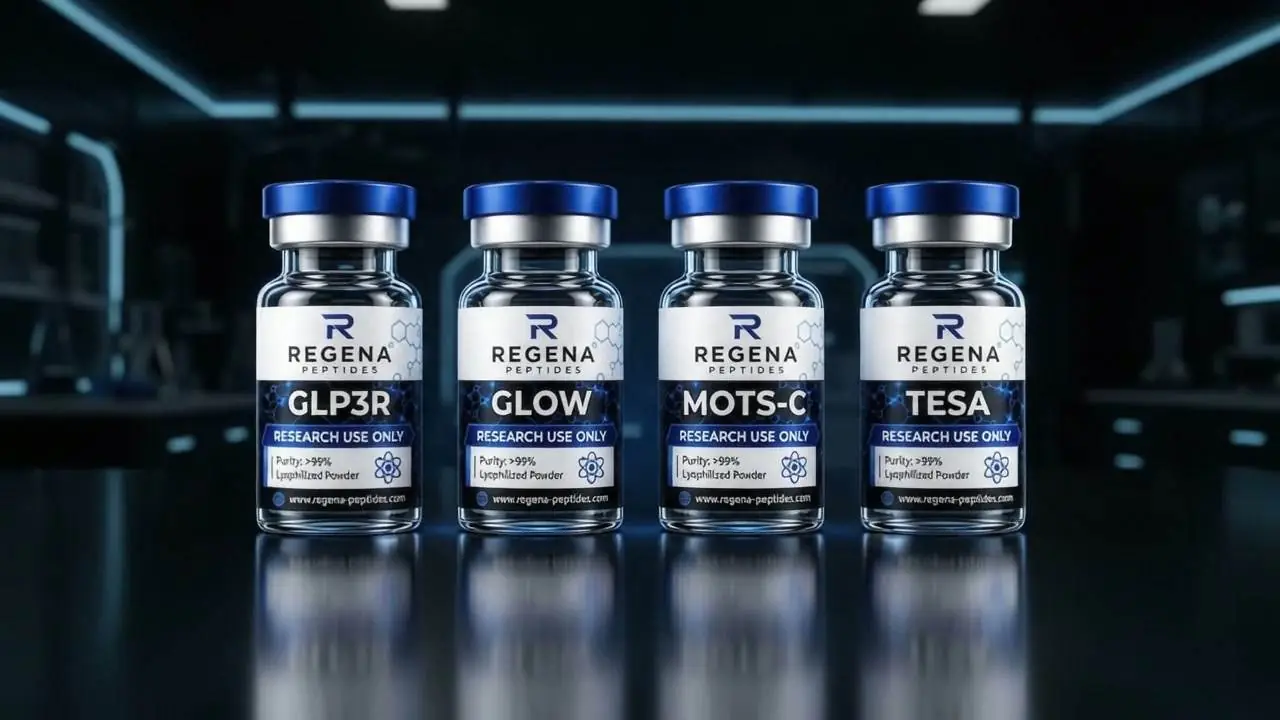

Daily keyword research · HPLC tested peptides
HPLC Tested Peptides for Cognitive Research: Semax, Selank, DSIP
Explore the critical role of HPLC testing for research peptides like Semax, Selank, and DSIP, ensuring purity for accurate laboratory studies.
Overview
In vitro research involving peptides necessitates stringent quality control to ensure reliable and reproducible outcomes. High-Performance Liquid Chromatography (HPLC) testing is a fundamental analytical technique employed to verify the purity and integrity of research-grade peptide compounds. For researchers investigating cognitive peptides such as Semax, Selank, and Delta Sleep-Inducing Peptide (DSIP), understanding the implications of HPLC validation is paramount.
The Significance of HPLC Testing in Peptide Research
HPLC is a widely utilized chromatographic method that separates components in a mixture based on their differential interaction with a stationary phase as they are carried by a mobile phase. For peptides, this technique precisely identifies and quantifies the main peptide component, as well as any impurities or side products generated during synthesis. The resulting chromatogram provides a visual and quantitative representation of the sample's purity profile.
**Key benefits of HPLC testing for research peptides include:** * **Purity Verification:** Ensures that the synthesized peptide batch meets established purity specifications, typically exceeding 95% for research applications. * **Impurity Identification:** Detects the presence of truncated sequences, deletion products, or other synthetic byproducts that could confound experimental results. * **Accurate Quantification:** Allows for precise determination of the active peptide concentration within a sample, critical for preparing accurate dilutions and dosages in *in vitro* studies. * **Reproducibility:** Provides a consistent standard of quality, which is essential for replicating experimental findings across different studies or laboratories.
Without rigorous HPLC analysis, researchers risk utilizing contaminated or inaccurately concentrated peptide samples, leading to erroneous data interpretation and invalidated research.
Semax: A Neuropeptide Under Cognitive Examination
Semax is a synthetic analog of a fragment of adrenocorticotropic hormone (ACTH) that has garnered interest in preclinical research for its potential neuromodulatory properties. Structurally, it is Pro-Gly-Pro-ACTH(4-7) amplified. Research has explored its effects on cognitive processes, neuroprotection, and modulation of brain-derived neurotrophic factor (BDNF) expression in various *in vitro* and animal models. Ensuring the high purity of Semax through HPLC testing is crucial for investigating its precise mechanisms of action and effects on neuronal pathways without interference from synthetic impurities. This peptide is exclusively for laboratory research.
Selank: A Synthetic Analog Targeting Anxiety and Cognitive Function
Selank is a synthetic peptide, a heptapeptide analog of the human body's tuftsin, possessing regulatory and immunomodulatory properties. Preclinical studies have focused on its anxiolytic effects and its potential to influence cognitive functions such as memory and attention. The accurate synthesis and subsequent HPLC validation of Selank are vital for any research aiming to dissect its interactions with neurotransmitter systems, such as GABAergic pathways, or its impact on neuronal plasticity within controlled laboratory environments. This peptide is strictly for research use.
DSIP (Delta Sleep-Inducing Peptide): Research into Sleep Mechanisms
Delta Sleep-Inducing Peptide (DSIP) is a nonapeptide that was originally isolated from rabbits and shown to induce delta (slow-wave) sleep. Research interest in DSIP revolves around its potential roles in sleep regulation, stress response, and even opioid withdrawal. The purity of DSIP, confirmed by HPLC, is fundamental for *in vitro* studies investigating its binding to specific receptors, its influence on neurotransmitter release, or its effects on neuronal excitability models related to sleep-wake cycles. Contaminants could easily mimic or mask the subtle biological effects attributed to DSIP, rendering research findings unreliable. This peptide is for laboratory reference only.
The Regena Peptides Purity Standard
At Regena Peptides, all research-grade peptides, including cognitive-focused compounds like Semax, Selank, and DSIP, undergo comprehensive HPLC testing. This commitment ensures that researchers receive materials with documented purity, free from significant contaminants, enabling them to conduct their experiments with confidence and achieve reliable, replicable results. Each peptide is accompanied by a Certificate of Analysis (CoA) detailing its purity levels, mass spectrometry data, and other critical specifications. This rigorous quality control is foundational for advancing scientific understanding in areas such as neurobiology and cognitive function.
Learn more about the research applications of these and other cognitive-focused peptides in our comprehensive overview: [Cognitive Peptides: Semax, Selank, DSIP Overview](https://regenapeptides.com/blog/cognitive-peptides-semax-selank-dsip-overview-2026-07-30).
**Compliance Note:** *Regena Peptides products are strictly for research purposes only. They are not intended for human consumption or therapeutic use. Statements regarding potential applications are based on general scientific literature and are for informational purposes only. Researchers are responsible for adhering to all applicable regulations and ethical guidelines in their studies.*
Frequently asked questions
What is HPLC testing?+
HPLC (High-Performance Liquid Chromatography) is an analytical chemistry technique used to separate, identify, and quantify each component in a mixture, ensuring peptide purity for research.
Why is HPLC testing important for research peptides?+
It confirms peptide purity, identifies impurities, and provides accurate concentration data, all critical for reliable and reproducible scientific research outcomes.
Are Semax, Selank, and DSIP HPLC tested by Regena Peptides?+
Yes, all research-grade peptides from Regena Peptides, including Semax, Selank, and DSIP, undergo rigorous HPLC testing to ensure documented purity.
Can HPLC tested peptides be used in humans?+
No, HPLC tested research peptides are strictly for in vitro and laboratory research purposes only and are not intended for human use or consumption.
Continue your research
Order in 3 steps · tracked delivery
Get HPLC-verified research peptides
Every kit ships with its own third-party certificate of analysis. Dispatch is from Germany, the USA or China depending on destination and stock, with tracking on every order. Supplied for in-vitro research use only.
- 1
Choose your compound
Filter by research goal or search the catalog.
- 2
Checkout in 2 minutes
Bank transfer or card — volume pricing applied automatically.
- 3
Tracked dispatch
Batch COA in the box, tracking number by email.
Most ordered this month
BPC-157
From €269.00
Ipamorelin
From €249.00
Bacteriostatic Water
From €149.00
- HPLC ≥99% purity, batch-matched COA
- Tracked dispatch from Germany, USA or China
- Reship guarantee on non-delivery
Trusted reference supplier · Verified across review platforms
Trustpilot
4.8 / 5 · verified buyers
Google Reviews
Rated by Marbella clients
Scamadviser
Trust score verified
Verified Supplier
Peptides Lookup verified
SSL Secured
256-bit encrypted checkout
HPLC Verified
Batch COA on every vial
3 Shipping Hubs
Germany · USA · China
Discreet Delivery
Temperature-controlled
We accept · Multiple secure payment methods
- Bank Transfer
- Card via Revolut